Vermeil vs Gold-Plated Sterling Silver: What the Labels Mean
Share
A gold-looking ring is not one material. It is a stack: a core, a gold layer, and a label. Vermeil vs gold-plated sterling silver is the comparison that tells you whether that stack is named, or just implied.
GemRings! gold styles are 18k gold-plated 925 sterling silver. Several listings state a plate about 3 microns thick. That is not solid gold. It is also not the thin wash you find on a lot of brass fashion jewelry. The words on the page still matter more than a mood.
Vermeil vs gold-plated sterling silver: the three facts that matter
Three facts decide the difference. What sits under the gold. How thick the gold is. How many karats that gold alloy is.
Sterling silver is 92.5 percent silver. The rest is usually copper, which hardens the shank so a setting can hold. The Gemological Institute of America treats 925 as the usual jewelry standard. A 925 mark is a purity claim for the core, not a promise that the surface will stay gold forever.
Gold plating is a surface. Electroplating bonds a thin gold alloy onto that core. Karat describes the alloy, not the thickness. 18k gold is 75 percent gold. A micron is one thousandth of a millimetre. Thickness is how much gold you have to wear through before the metal underneath shows.
Vermeil is a narrower label. In U.S. Federal Trade Commission jewelry guides (16 CFR 23.4), a piece may be called vermeil only if the base is sterling silver, the gold is at least 10k, and the plate is at least 2.5 microns of fine-gold equivalent on all significant surfaces. The same guides let many other pieces be called gold-plated with a much thinner electroplate: a minimum of 0.175 microns of fine-gold equivalent (16 CFR 23.3). Both can be honest. They are not the same build.
Those rules are U.S. advertising guides. They do not rewrite EU hallmarks. If you shop from Europe, treat “vermeil” as a specification, not a stamp you will see on every inner shank.
What “gold-plated” can hide
“Gold-plated” names a process. It does not name the core. A brass ring with a flash of gold is gold-plated. A 925 ring with 18k gold three microns thick is also gold-plated. The first can look warm in a photo and cool or patchy after a few months of dishes and desks. The second still wears. It wears slower, and what shows through is silver, not an unnamed alloy.
If a listing only says “gold tone” or “gold color,” assume the plate is thin and the core is not precious. Ask for the metal, the karat, and a thickness in microns. Silence is information.
A heart-cut lemon quartz on a slightly domed band is a useful weekday example of the thicker build. The listing names 18k gold-plated 925 sterling silver and a 3-micron plate. The stone is lemon quartz, about 10×10 mm (roughly 3 carats). The ring weighs about 3.1 grams. Quartz sits around 7 on the Mohs scale: hard enough for ordinary scratches, still able to chip on a knock. The dome adds contact with desks. Take it off for bleach and the gym. Wear it as the warm piece on that hand.
What vermeil actually requires
Vermeil (often said “ver-MAY”) started as gold over silver. The FTC version is specific so the word cannot be used on any warm-colored ring.
- The core is sterling silver, at least 925 parts per thousand.
- The gold layer is at least 10k.
- The thickness is at least 2.5 microns of fine-gold equivalent, on all significant surfaces.
A nickel interlayer under the gold should be disclosed if someone still wants the vermeil word. Heavy gold electroplate, in the same U.S. guides, also starts at 2.5 microns of fine-gold equivalent. It does not require a silver core. That is why “thick gold plate on brass” and “vermeil” are not synonyms.
GemRings! does not sell its rings as vermeil. The catalog says 18k gold-plated 925 sterling silver. That is the accurate shop label. A 3-micron 18k plate on silver sits near those thicker U.S. categories. It is still a plate. Do not treat the word vermeil as an upgrade you are missing, or as a certificate the ring already has.
How a textured gold-plated band wears
Ridges and flutes look considered. They also create high spots. Those high spots meet other rings, pockets, and keyboards first. A godronné (fluted) shank is a good place to see that physics.
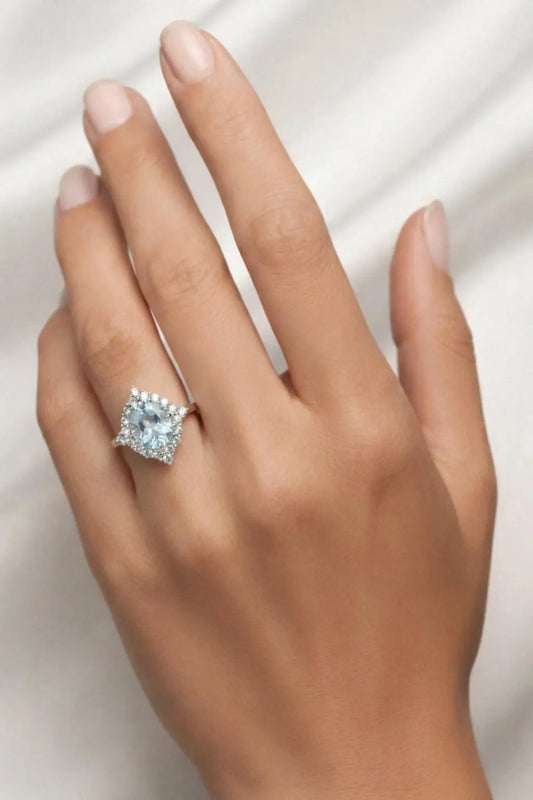
This ring is 18k gold-plated 925 sterling silver. The listing states a 3-micron plate. The center is an oval-cut sky blue topaz of about 3 carats, with 10 cubic zirconia stones. Weight is about 3 grams. Topaz is about 8 on the Mohs scale and has cleavage: weekday wear is fine; a sharp knock on an edge is how chips happen. Wear the fluted band alone on that finger if you want the plate to last. A slim silver companion can sit on another finger. Browse the 18k gold-plated rings collection when you want this warm finish, or stay with 925 sterling silver rings if you prefer a cooler metal and simpler care.
A lighter plated ring still has the same metal stack
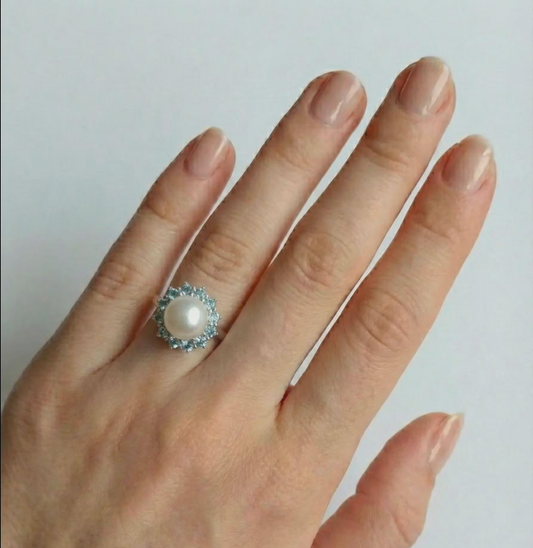
Weight is comfort, not karat. A 2.2-gram trilogy uses the same 18k plate over 925 silver as a heavier dome. The listing again states about 3 microns. The center is a heart-cut mint green quartz of about 8×8 mm (roughly 1.5 carats), with two pear-shaped green quartz stones of about 0.7 carats each. Three stones mean more prongs and more places to catch a jumper. Leave the next finger empty. Confirm the EU size before you order; a spinning plated ring rubs the inner shank all day.
How to read a listing before you buy
Read the materials line the way you would read a food label.
- Core metal: 925 sterling silver, named. Not “alloy.”
- Surface: 18k gold-plated, or another stated karat. Not only “gold look.”
- Thickness: a number in microns. GemRings! gold styles are about 3 microns when the page says so; if a page is silent, do not invent a number.
- Stones: species and whether they are natural, synthetic, or cubic zirconia.
18k describes color and alloy. Microns describe how long that color can last on a ring. Rings take more abrasion than earrings. Inner shanks and stacked bands show silver first. That is expected wear, not a fake.
For habits that slow that wear (water, chlorine, cloth versus dip), see how long gold-plated jewelry lasts. This article is about the label. That one is about the years.
A short buying note
Plated gold is a color choice on a silver core. It is not an investment bar. It is not solid 18k. If you want gold that can be resized and refinished like a solid shank, you are shopping a different category and a different price. If you want a warm everyday ring with a named stone and a published plate, 18k gold-plated 925 silver is the honest version in this catalog.
EU orders can come back unused within 14 days of receipt; you cover return shipping. Sales outside the EU are final. Measure in the evening. Use the EU millimetre size (ISO), not a U.S. screenshot. A slightly tight plated ring that you fight on and off will scuff faster than a correct millimetre.
Is vermeil better than gold-plated sterling silver?
Only if the vermeil piece actually meets the three rules, and the other piece is a thin plate on a mystery metal. Gold-plated sterling silver with a published 3-micron 18k layer is already a thick, named build. The word on the tag matters less than those numbers.
Can I call a 3-micron 18k plate on 925 silver vermeil?
Shops should use the word they can defend. GemRings! lists 18k gold-plated 925 sterling silver. Keep that language. Vermeil is a U.S. guide term with a fine-gold-equivalent thickness rule. Do not relabel a product page to win a search term.
Does plated gold turn a finger green?
A worn-through brass plate can mark skin for some people. A 925 silver core showing through gold is a color change on the metal, not a medical event. Wash with mild soap if the ring feels grimy. Stop wearing a piece that irritates you, and check the listing for a disclosed nickel interlayer.
Is 18k plating the same as 18k solid gold?
No. 18k solid gold is gold alloy through the shank. 18k plating is a surface of that alloy over another metal. The color can match. The repair options and the price do not.
Buy the stack you can name: 925 silver, 18k plate, a thickness in microns, a stone with a species. That is the useful answer to vermeil vs gold-plated sterling silver. The rest is vocabulary.