How to Tell if Your Sterling Silver Ring Is Real: Easy Tests at Home
Share
The listing says 925. The inner shank might too. That is a claim, not a laboratory report. If you want to know how to tell if a sterling silver ring is real, pair the stamp with how the metal behaves: magnetism, wear color, and whether the seller will name the alloy. Fake 925 marks exist. So do honest rings that never got stamped.
GemRings! rings are 925 sterling silver. Gold styles add an 18k gold plate about 3 microns thick over that silver core, unless a product page says otherwise. Stones are named on the listing. None of this is solid karat gold. None of it is a mined diamond. A green smear on your finger is chemistry and sweat, not a diagnosis, and it is not, by itself, proof of a fake.
What “925” and “sterling” are allowed to mean
The Gemological Institute of America describes jewelry silver as an alloy. Pure silver is too soft for a ring you type in. Sterling silver is 92.5% silver mixed with 7.5% other metals—usually copper, sometimes nickel—so the shank can take a stone and daily knocks. A “999” or “fine silver” mark means 99.9% silver. That metal dents. It is rare on everyday rings.
The U.S. Federal Trade Commission’s consumer guide is blunt. “Silver,” “sterling,” and “sterling silver” mean 92.5% pure silver. A “925” mark means 925 parts per thousand. U.S. rules also expect a name or registered trademark of the company behind that mark. The jewelry guides (16 CFR 23.5) reserve “Sterling” and “Ster.” for metal that is at least 925/1,000ths silver. The National Stamping Act forbids stamping a silver-plated article “sterling” or “coin.” Coin silver is a lower standard: 90%. If a page will not say 925, sterling, or plated, do not fill in the blank.
How to tell if a sterling silver ring is real without damaging it
Start with light, not acid. Hold the ring under a lamp and tilt the inner band, opposite the stone. Look for 925, .925, Sterling, or Ster. Marks wear thin on old rings. A loupe helps. Then read the rest of the metal for contradictions.
- Read every word, not just the number. EP, EPNS, “silver plated,” “electroplate,” and “silver overlay” mean a skin of silver over another metal. “Nickel silver,” “German silver,” and “alpaca” are copper-nickel-zinc alloys. They can look white. They are not required to contain silver at all.
- Try a magnet. Silver is not ferromagnetic. A fridge magnet that snaps to the shank is a warning: stainless steel and some nickel alloys will grab. A magnet that does nothing is not proof of silver. Brass, copper, aluminum, and many white-metal costume alloys also sit still.
- Look at wear, not polish. Plating fails first on the inner shank, the edges of the band, and under the setting. Brass or copper showing through is a plated base, not sterling worn “to gold.” Real 925 wears to more silver. An 18k gold plate over 925 should wear to silver, not to yellow base metal.
- Treat tarnish as a clue, not a verdict. The Canadian Conservation Institute describes sterling tarnish as silver sulfide—plus copper sulfide—from sulfur gases such as hydrogen sulfide. The metal goes yellow, then brown, then grey-black. Sterling often tarnishes faster than fine silver because of the copper. Silver plate on copper can tarnish too. An anti-tarnish coating or a recent polish can keep real 925 bright. Absence of tarnish proves nothing.
- Weigh expectations, not the ring on a kitchen scale. Sterling is denser than most costume metals. A GemRings! silver band with a modest stone often sits around 2–5 grams on the spec sheet. A hollow fashion ring that feels like foil is a different object. Weight is context, not a home assay.
Skip the internet stunts. Nitric acid, bleach, and “bite tests” damage metal, stones, and skin. Toothpaste and baking soda paste are abrasives; they haze quartz and can thin gold plate. If the ring is expensive enough that a fake would hurt, ask a jeweler for an X-ray fluorescence (XRF) reading. That is a composition scan, not a personality test.
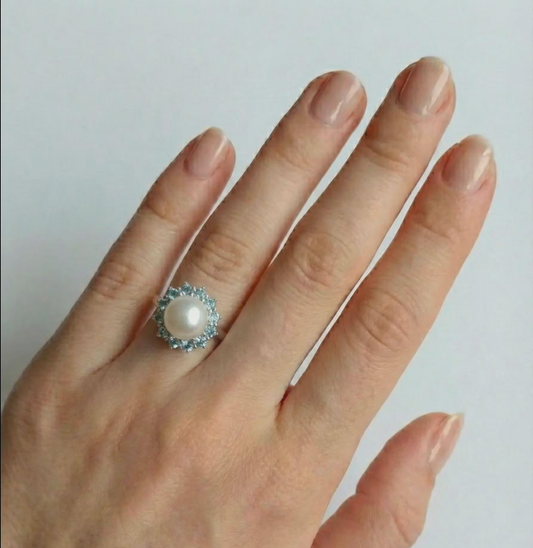
This listing is the simple case: 925 sterling silver, a natural champagne quartz of about 1 carat in a marquise cut, about 3 grams, no side stones. No anti-tarnish line on the page. Still sterling—and still a shank that will meet sulfur in air. More cool-metal pieces live in 925 sterling silver rings.
Marks and phrases that fail the sterling test
A pretty white metal is not a standard. Before you pay a sterling price, scan for these:
- Plated language. Silver plate, electroplate, EP, EPNS (electroplated nickel silver). The surface can be silver. The core is not sterling throughout.
- False friends. Nickel silver and German silver are names, not hallmarks. They describe a white base alloy.
- Lower fineness. “800” is a continental silver mark of 80% silver. Real silver. Not sterling. “Coin” or “coin silver” is 90% in U.S. usage.
- A 925 stamp on a magnetic ring. Treat the stamp as decoration until a jeweler confirms the alloy.
Handmade or older rings can be sterling with no stamp. Then you rely on construction, a maker you trust, and a professional test. Do not invent a 925 in your head because the shop used the word “silver” in a product title.
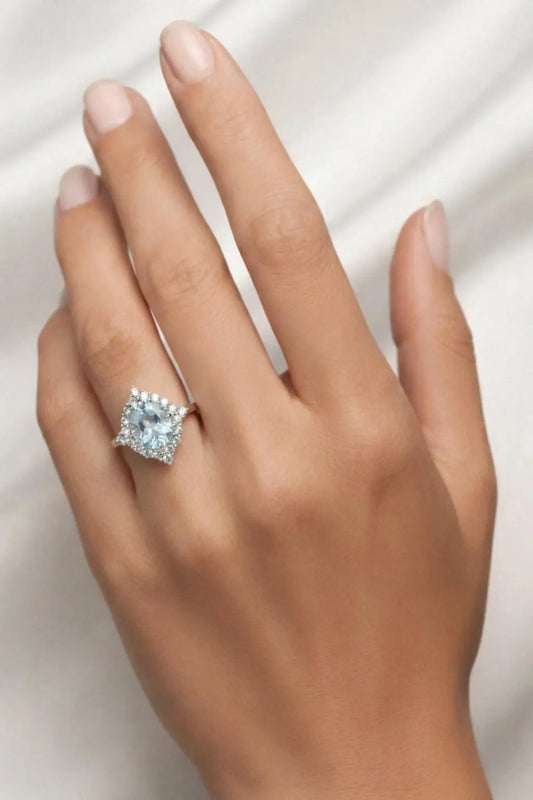
925 sterling silver with an anti-tarnish treatment, a faceted oval natural sky blue topaz of about 3 carats, 20 light Swiss blue topaz in the halo, about 3.3 grams. The treatment is a factory finish. It slows sulfide. It does not change the alloy, and it does not keep lotion out of the melee. Dry it. If the silver dulls, use a method that matches the stones—see how to clean silver jewelry at home. Do not use silver dip on a gem-set ring.
Gold-plated 925 is still a sterling silver ring
Shoppers mix up three products. Silver-plated brass is a white skin on a cheap core. Solid 14k or 18k gold is a gold alloy throughout. Gold-plated sterling is a silver ring with a gold wearing surface. GemRings! gold styles are the third: 18k gold (75% gold) plated about 3 microns thick on a 925 core, when the page says so.
That matters for the authenticity test. You should not expect a gold-colored GemRings! ring to attract a magnet or to flash brass when the plate thins. You should expect silver at a worn inner shank. Keep plated rings out of chlorine and abrasive silver cloths. Storage that lets a harder stone sand the plate overnight is how you see the core sooner—see how to store rings to prevent tarnish.
18k gold-plated 925 sterling silver, a 10×10 mm heart-cut lemon quartz of about 3 carats, a slightly domed band, about 3.1 grams. The product page states the 3-micron 18k plate. Lemon quartz is quartz, not yellow sapphire. Warm-metal versions of the same construction live in 18k gold-plated rings. The authenticity question here is the silver core, not whether the color is “real gold” in the solid-karat sense. It is not.
What a green finger does—and does not—prove
Sterling’s usual alloy partner is copper. Sweat, lotion, and a tight band can move a little copper to the skin as a green or grey film. Plated base metal can do the same, often faster, when the plate is gone. Neither reaction is a medical claim, and neither reaction proves the ring is fake. If a ring is advertised as 925 and the inner shank is already yellow metal, believe the shank. If the metal is still white and the mark is 925, believe the listing until a test says otherwise.
Buy the specification. A real sterling silver ring names 925, does not grab a magnet, wears to silver rather than brass, and comes from a seller who will write the alloy down. The stamp starts the conversation. The metal finishes it.
FAQ
Does a 925 stamp mean a sterling silver ring is real?
If the stamp is legitimate and the piece is sterling throughout, yes: 925 means 92.5% silver. Counterfeit stamps exist. Pair the mark with a magnet check, wear color, and a seller who also names the metal on the page.
Is gold-plated jewelry fake silver?
Not if the core is 925 sterling silver. Gold plate is a surface color. Silver plate on brass is a different product. Read the listing: “18k gold-plated 925 sterling silver” is not “gold-plated alloy.”
Does real silver always tarnish?
Sterling reacts with sulfur gases and usually will, given time and humidity. Anti-tarnish coatings, dry storage, and frequent wear slow what you see. Bright metal is not proof of costume jewelry.
What is the safest home test?
A lamp, a magnet, and worn edges. Leave acids and bleach alone. If money is at stake, pay a jeweler for XRF.