Silver Ring Turns Finger Green: Causes and Simple Fixes
Share
A green smear under a band is usually chemistry, not a verdict. If a silver ring turns finger green, the copper that hardens 925 sterling is reacting with sweat, soap, or lotion. The mark sits on you. It is not the silver going mouldy, and it is not automatic proof the ring is fake.
GemRings! bands are 925 sterling silver. Gold-looking styles are 18k gold-plated over that same silver, about 3 microns thick unless a product page says otherwise. Both can leave a faint tint on some people in heat, after the gym, or when a tight size traps water. Here is what the colour means, how to wash it off, and which habits actually slow it down.
Why a silver ring turns finger green
Sterling silver is 92.5 percent silver. The rest is almost always copper. Silver is relatively quiet on skin. Copper is not. Moisture, salt, and acids in sweat oxidise that copper. The Royal Society of Chemistry describes the same reaction on copper jewellery: oxides, chlorides, and a thin green-blue patina (verdigris) form on the surface and rub off onto your hand.
Rings do this more than earrings. A shank sits against one strip of skin all day. It also meets sink water, sanitiser, and leftover cream. More moisture under the band means more copper compounds, then a mint or grey-green line when you take the ring off.
Heat, workouts, and some medicines make sweat more acidic or more plentiful. Summer marks show up faster than winter ones. That does not rewrite the 925 stamp.
Green skin is not the same as tarnish
Two different reactions get mixed up in the same search box.
Tarnish darkens the metal. Silver reacts with sulfur in air and wool and some cosmetics. The ring looks dull or yellow-grey. The finger may stay clean.
A green finger is transfer. Copper compounds sit on skin. The ring can still look bright, especially if it has an anti-tarnish treatment like the ones listed on GemRings! silver styles.
Neither reaction means the piece is costume brass. Cheap base-metal rings can stain too, often faster. A 925 mark plus a listing that says sterling silver is the useful check, not the colour of yesterday’s sweat.
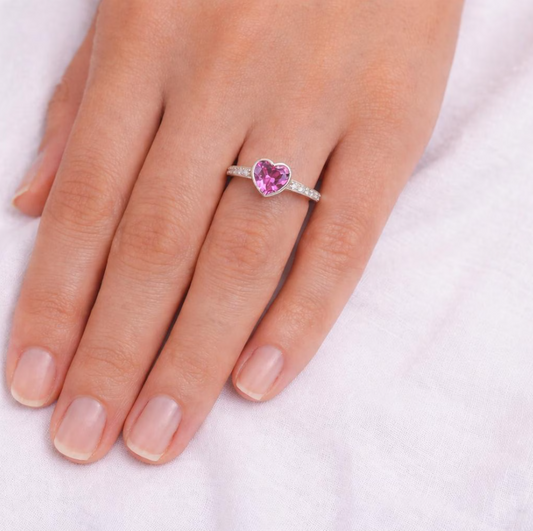
A slim everyday band is where green marks show first. This 925 sterling silver ring weighs about 1.6 grams and carries a 5×5 mm heart-cut cubic zirconia (about 0.8 carats) plus 22 smaller CZ stones. Light metal sits closer to the skin and dries slower after you wash your hands. Wear it alone on that finger if you want less trapped moisture; add a second slim band only when both pieces are fully dry. Browse the 925 sterling silver rings if you prefer a cool metal and a named 925 core.
What to do when the mark is already there
Treat the skin and the ring as two short jobs.
On your finger. Wash with mild soap and warm water. The residue is a surface stain. It usually lifts in one wash. If a faint tint remains, a drop of soap on a soft cloth is enough. Do not scrub with bleach, acetone, or a scouring pad. Those irritate skin and do nothing useful to copper salts that are already gone.
On the ring. Rinse in lukewarm water. Use a drop of mild dish soap and a soft jewellery cloth or a clean cotton swab on the inner shank, where sweat collects. Dry it completely, including under any open setting. A damp band put back on a damp finger restarts the same reaction before lunch.
Skip silver dips and toothpaste on plated styles, and be cautious with dips even on bare silver. A dip is a chemical bath. It can pit a finish and sneak under stones. A cloth is slower and safer for daily rings.
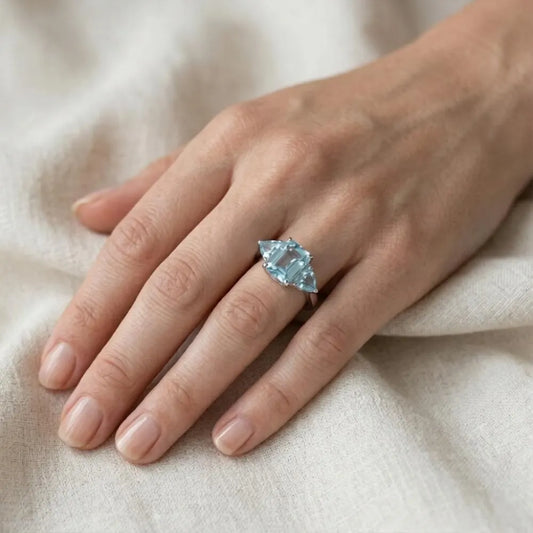
A heavier 925 piece still has the same alloy. This halo uses polished sterling silver with an anti-tarnish treatment, a natural emerald-cut amethyst of about 3.2 carats, and twenty smaller natural amethysts. It weighs about 5.4 grams. More metal means a wider inner shank, so dry the underside after you wash up. Leave the next finger empty if you stack; two wide bands trap more soap than one.
Habits that keep a 925 band quieter on your skin
You will not change the copper content of sterling. You can change how long it sits wet.
- Take rings off to wash hands, shower, and wash dishes. Soap film holds water against the shank.
- Keep them off for workouts, saunas, and hot commutes. Sweat is the main accelerant.
- Let lotion, sunscreen, and sanitiser dry before the ring goes back on. Many formulas are slightly acidic or salty.
- After wear, wipe the inner band with a dry cloth. Ten seconds, not a ritual.
- Store pieces dry and separate. A bathroom saucer next to the tap is how rings stay damp overnight. See how to store rings to prevent tarnish for a calmer setup.
Clear nail polish on the inner shank is a folk barrier some people like. It can help for a week or two. It also chips, and it is not a jewellery finish. If you try it, use a thin coat, let it cure fully, and redo it when it peels. Do not paint over stones or open galleries.
Rhodium or other bright white plating is another shop-applied barrier. GemRings! silver listings describe an anti-tarnish treatment, not a separate rhodium spec. Treat that as a help against dulling, not a promise that your finger will stay unmarked in August.
Gold-plated silver can still leave a mark
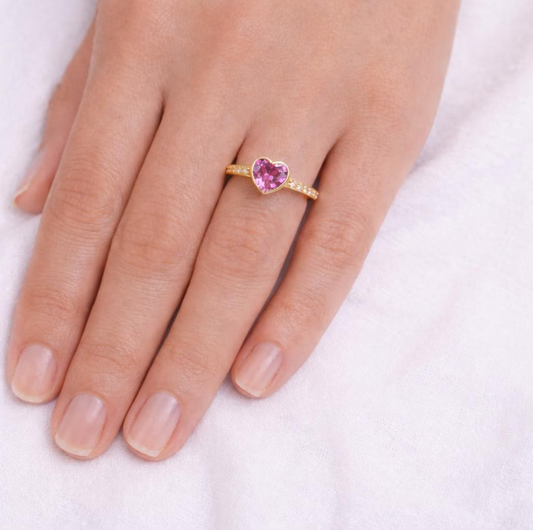
An 18k plate is a thin gold alloy on top of 925 silver. This heart style states 18k gold-plated sterling silver, a plate about 3 microns thick, a heart-cut synthetic pink sapphire of about 2 carats, and twelve cubic zirconia accents. Weight is about 4 grams. While the plate is intact, less copper meets the skin. That is a delay, not a different metal.
Plated gold is not solid gold. High spots on a band meet keys, desks, and other rings first. When silver shows through, the copper in the core can stain the same way a bare 925 band can. Take plated rings off for chlorine, bleach, and the gym. A spinning ring scuffs the inner shank faster; confirm your EU millimetre on the ring size guide before you order.
Fit matters more than people think
A ring that pinches holds a moat of water. A ring that spins rubs wet metal around the finger. Both raise the chance of a green line.
Measure in the evening, when fingers are warmer. GemRings! uses EU sizes (ISO millimetres). The silver and gold-plated cards above are listed in 50, 52, and 54. If you sit between sizes and your climate is humid, the slightly roomier option is often kinder than a tight shank you fight on and off. A correct size will still need drying. It just spends less of the day wet.
When a green mark is not the only problem
A stain that washes off is a material note. Itch, swelling, or a rash that shows up a day later is a different problem. Stop wearing the ring. Do not self-diagnose nickel from a blog post. GemRings! listings do not claim a nickel-free alloy or medical “hypoallergenic” status.
If the inner shank is flaking unknown yellow metal, and the listing never named 925, you may be looking at a worn brass plate. That is a different product than gold-plated sterling. Read the materials line. If it only says “gold tone,” assume a thin wash on a mystery core.
A short buying note
Buy the metal you can name. For this catalog that is 925 sterling silver, sometimes with an 18k plate about 3 microns thick, and a stone with a species (amethyst, topaz, cubic zirconia, synthetic sapphire). A green finger after a hot day is an expected copper reaction for some wearers. It is not a hidden upgrade, and it is not a reason to throw out a marked 925 ring.
Keep one daily band if you work with your hands. Give it a dry cloth at night. Take it off for soap and chlorine. That is most of the fix.
Does a green finger mean my silver ring is fake?
No. Real 925 sterling contains copper. That copper can mark skin. A fake brass ring can mark too. Check the listing and the stamp, not the colour of the stain.
Is the green mark dangerous?
The usual stain is a surface residue and washes off. This is not medical advice. If the skin itches, cracks, or stays inflamed after the colour is gone, stop wearing the piece and get the reaction checked.
Will gold-plated rings stain less than silver?
Often, while the plate is continuous. GemRings! gold styles use 18k gold about 3 microns over 925 silver. Once the plate wears on the inner shank, the silver-copper core is back in contact with sweat.
Can I keep wearing the ring every day?
Yes, if the only issue is a washable tint and the skin itself is calm. Build in off-time for water and workouts. If you want zero contact between copper alloy and skin, you are shopping a different metal category, not a different 925 finish.